Pakistan runs two completely different secondary education systems side by side. On one side, there are roughly 4.72 million students enrolled in the national Matriculation system. On the other hand, over 226,000 students sat Cambridge O Level and IGCSE exams in 2024 alone a number that grew 9% in a single year.
That gap tells you something important. O Level is not yet the majority path. But it is the fastest-growing one, and understanding what it actually offers is the first step every parent needs to take.
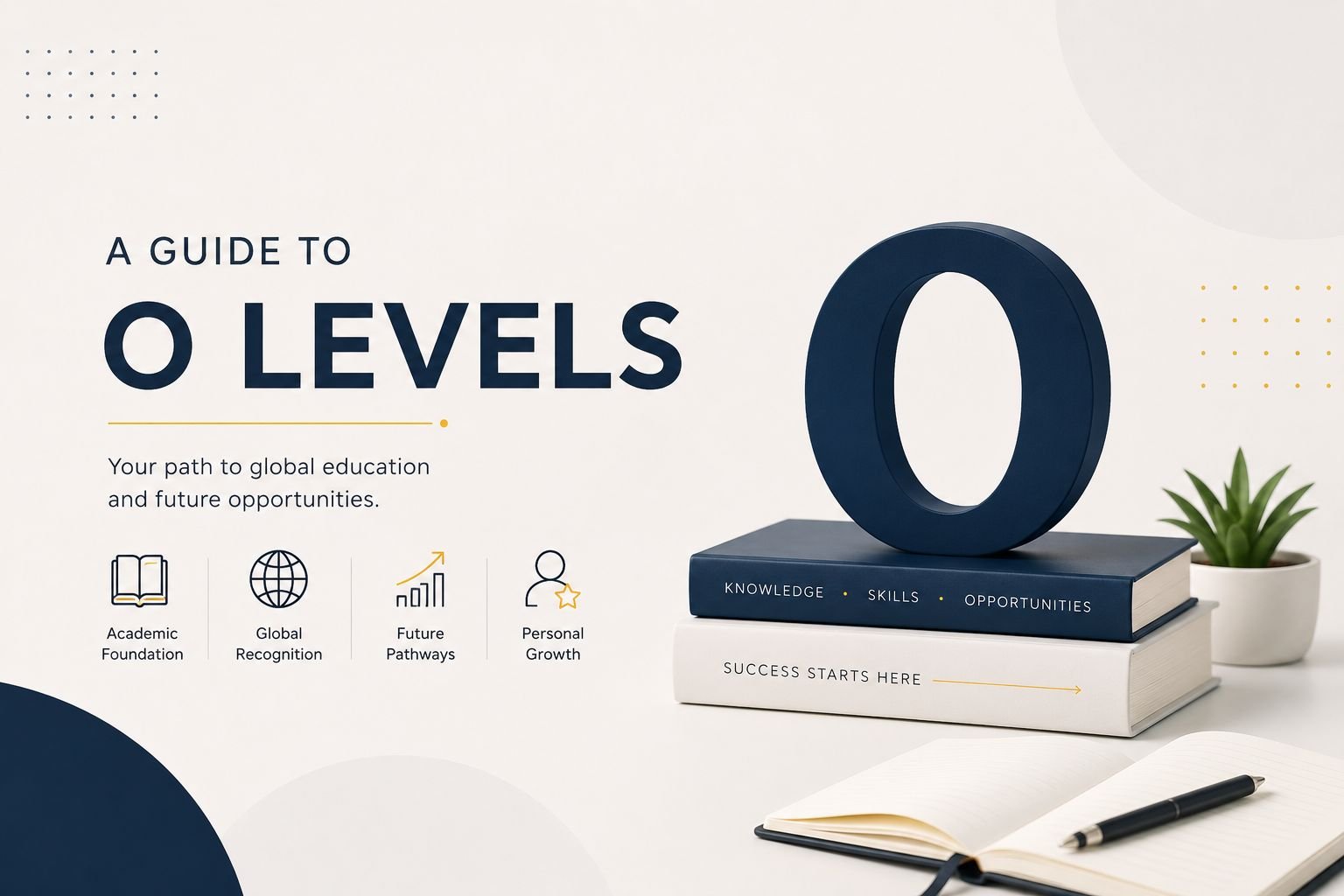
This guide answers every core question, what O Level is, how it works, what it costs, how it compares to Matric, and whether it is the right choice for your child.
What Is O Level, Exactly?
O Level stands for Ordinary Level. It is a secondary school qualification developed and awarded by Cambridge Assessment International Education (CAIE), headquartered in the United Kingdom.
Students typically sit O Level exams between the ages of 14 and 16, covering Grades 9 and 10 in Pakistan’s school structure. Upon passing, students receive a Cambridge International Certificate, a credential accepted for university admissions in over 160 countries, including the UK, USA, Canada, Australia, and the UAE.
Cambridge first introduced O Level in Pakistan in 1959, adopted almost immediately by top private institutions in Karachi. Since then, the system has expanded from a handful of elite schools to over 800 CAIE-registered schools nationwide as of 2024.
How Many Pakistani Students Do O Level vs Matric?
This is the question most parents silently want answered before anything else.
| Education Path | Estimated Students | Source |
| Matriculation (SSC) | ~4.72 million (FY 2023) | Economic Survey of Pakistan 2024–25 |
| O Level / IGCSE (Cambridge) | ~226,000+ (2024 exams) | Express Tribune / CAIE |
| Approximate O Level share | ~4.8% of total secondary students |
In raw numbers, Matric is still the massive majority. But context matters. O Level is almost entirely a private-school system concentrated in urban centers. Cambridge exam entries in Pakistan grew by 9% in 2024 compared to the previous year, with over 1.6 million total entries recorded across all Cambridge qualification. Karachi alone hosts approximately 200 schools offering the Cambridge curriculum.
How Does O Level Work?
O Level is subject-based and externally examined. Students choose a set of subjects, study them for two or three years, Students take their final examinations in Pakistan, and the examination papers are assessed and graded by CAIE in the UK. Assessment is primarily through written examination and for Practical Exams Alternative to Practical is taken in written form.
The Two Exam Series
| Series | Exam Months | Results Released |
| May / June | April – June | August |
| October / November | October – November | January |
Most Pakistani students sit their final O Level exams in the May/June series at the end of Grade 10 for Pak Studies(2059) and Islamiyat(2058). Some students spread subjects across both series to manage workload or improve grades.
How Papers Are Structured
Each subject has two or three separate papers. Physics (subject code 5054), for example, consists of:
- Paper 1 — Multiple Choice (40 marks)
- Paper 2 — Theory / Structured Questions (80 marks)
- Paper 6 — Alternative to Practical (40 marks)
Marks from all papers are combined and converted into a final letter grade. The grade thresholds are set by Cambridge after each exam series, adjusted for difficulty. You can access past papers easily, here’s a guide how to do it.
What Grades Can a Student Receive?
| Grade | What It Means |
| A* | Outstanding — highest level of achievement |
| A | Excellent |
| B | Very Good |
| C | Good — Widely accepted as a strong pass |
| D | Satisfactory |
| E | Acceptable — A passing grade |
| U | Ungraded — Fail |
For university admission in Pakistan, most institutions require a minimum of 8 O Level subjects with grades A* to C. IBCC equivalence calculations are based on grades achieved across at least 8 subjects.
One important distinction: grades in O Level are not fixed percentages. Cambridge sets grade boundaries after each exam series based on how difficult the paper was, threshold is released every year by Cambridge, a day prior to result day or after a week ensuring that achieving a grade is equally demanding year on year, regardless of paper difficulty.
What Subjects Can Students Study?
Cambridge offers over 70 subjects globally. Most registered schools in Pakistan offer the following:
Compulsory at Most Schools
- English Language
- Mathematics
- Pakistan Studies
- Islamiyat (for Muslim students)
- Urdu
Popular Optional Subjects
| Science Stream | Commerce & Humanities | Language & Arts |
| Physics | Business Studies | Urdu |
| Chemistry | Economics | Art & Design |
| Biology | Accounting | English Literature |
| Additional Mathematics | Computer Science | History |
| Geography |
Most students take additional subjects in O levels making total of 10 subjects. According to CAIE’s 2024 results data for Pakistan, the most popular O Level subjects were Pakistan Studies, Islamiyat, Mathematics, English, and Urdu and Computer Science.
How Does O Level Compare to Matric?
| Factor | O Level | Matric (SSC) |
| Awarding Body | Cambridge (CAIE) — UK | Pakistani Boards (FBISE, BISE, etc.) |
| International Recognition | 160+ countries | Primarily Pakistan |
| Assessment Style | Conceptual, analytical, application-based | Marks-based; traditionally more rote learning |
| Language of Instruction | English | Urdu or English (board-dependent) |
| Grading System | A* to U (letter grades) | Percentage marks out of 1100 |
| Exam Flexibility | Two annual sessions; subjects retaken individually | Annual exam; subjects retaken individually |
| Cost | High — private school fees + Cambridge fees | Low to moderate — accessible at govt. schools |
| IBCC Equivalence Needed? | Yes, to enter Pakistani universities | No — directly accepted |
| University Access | Global + Pakistan (with IBCC) | Primarily Pakistan, for international Universities Attestation is required. |
Research published in the Journal Usooluddin (2019) identified the primary reasons Pakistani families choose O Level as: better learning outcomes, a fairer examination system, an internationally relevant curriculum, and stronger prospects for admission to foreign universities.
Does O Level Work for Pakistani University Admissions?
Yes, but there is one mandatory step many families are unaware of until it is too late.
Students with O Level qualifications must apply to the Inter Board Committee of Chairmen (IBCC) to get their Cambridge grades converted into a Pakistani-equivalent percentage. IBCC requires a minimum of 8 O Level subjects for full equivalence.
| Cambridge Grade | IBCC Percentage Equivalent |
| A* | 90% |
| A | 85% |
| B | 75% |
| C | 65% |
| D | 55% |
| E | 45% |
Top Pakistani universities, including LUMS, NUST, IBA Karachi, and Aga Khan University, directly accept O Level qualifications and often have their own entry criteria beyond the IBCC conversion.
How Much Does O Level Actually Cost in Pakistan?
| Cost Component | Approximate Annual Range (PKR) |
| School tuition fees | 500,000 – 12,00,000+ |
| Cambridge exam registration (per subject) | 35000 – 55,000 |
| Books and study materials | 20,000 – 50,000 |
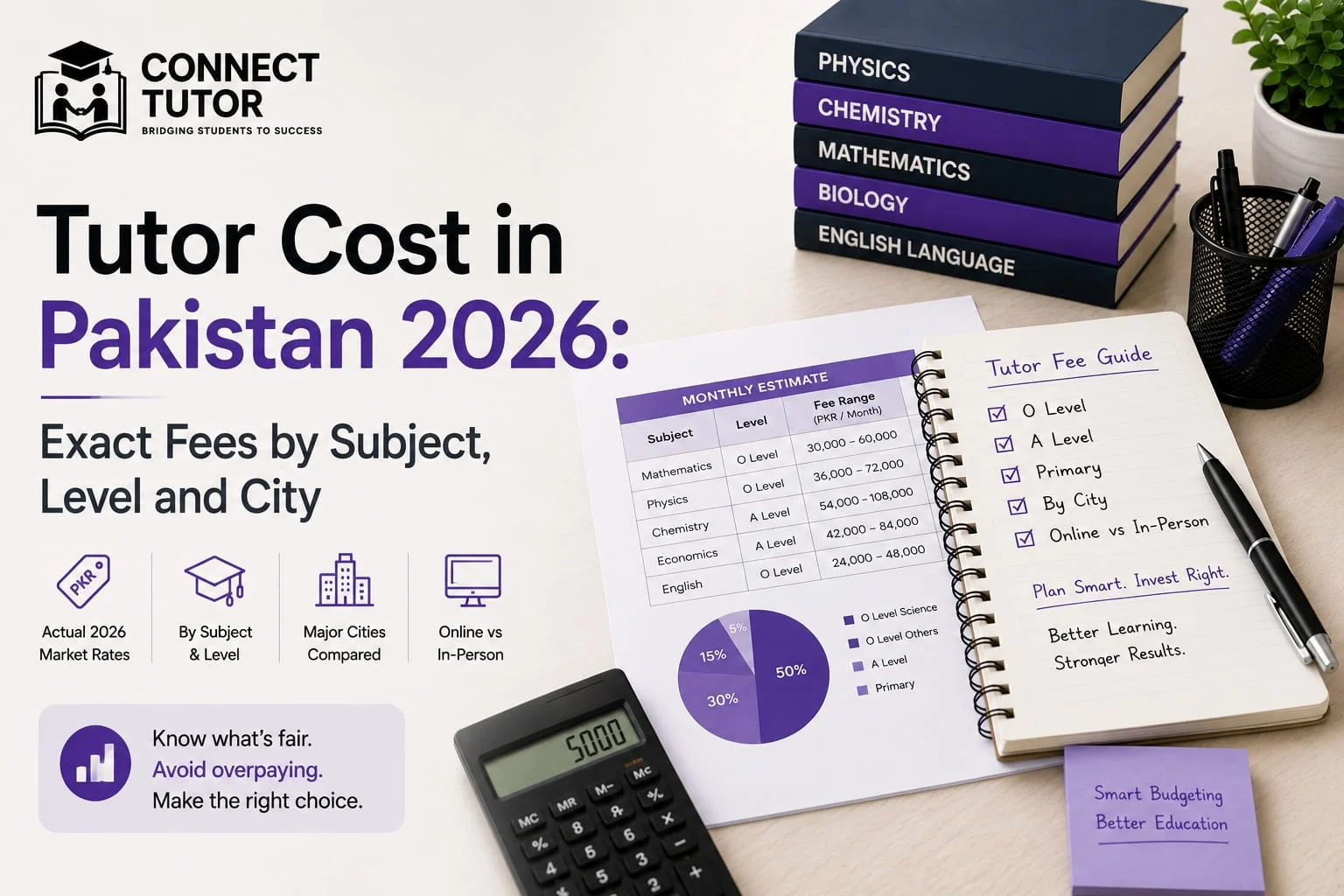
| Private tuition (per subject, per month) | 25,000 – 60,000 |
| Estimated total (per year) | 850,000 – 1,500,000+ |
62% of secondary school students in Lahore were receiving private tuition, the highest rate of any city studied in Pakistan.
What Comes After O Level?
1. A Level (Cambridge Advanced Level) The most common progression route. Students choose 3–4 subjects for two further years. In 2024, over 125,000 Pakistani students sat A Level exams.
2. Intermediate (FSc or FA) — Some O Level graduates switch to the Pakistani board system for Grades 11–12. This requires IBCC equivalence and is common for students targeting MDCAT or ECAT pathways.
3. IB Diploma Programme (IBDP) — Offered at select schools in Pakistan. Highly regarded by international universities and runs as a direct alternative to A Level for global applicants.
4. Foundation Programmes — One-year programmes offered by some international universities for O Level graduates who do not yet hold A Level or equivalent qualifications.
The Private Tutoring Factor: Why Most O Level Students Seek Extra Support
Private Tutoring has become a Major Part of Pakistan Education System, 30 to 40% of primary school students in Pakistan already receive private tutoring. By secondary level, this rises sharply, reaching 62% in some urban districts. Here is a guide to find the best O/A level Tutor.
For O Level students, where exam stakes are higher and subjects more demanding, supplementary tutoring has become close to standard practice rather than an exception. The subjects most sought-after Mathematics, Physics, Chemistry, and English and Computer Science, align directly with the subjects that carry the most weight in grade-point calculations and IBCC equivalence.
A student who improves from a C to an A in Mathematics gains 20 percentage points in their IBCC equivalent, a difference that can determine university admission.
Frequently Asked Questions
How many students do O Level in Pakistan each year?
Over 226,000 students appeared for O Level and IGCSE examinations in Pakistan during the 2024 May/June series. A 9% increase compared to the previous year. This figure is growing annually.
Is O Level harder than Matric?
O Level exams are generally more conceptual and application-based than Matric, which has historically been more dependent on memorization. However, difficulty is subjective. The grading system is also more forgiving grade thresholds shift based on overall difficulty, ensuring no student is penalized unfairly for a particularly hard paper.
Can a student sit O Level without attending a Cambridge school?
Yes. Private candidates in Pakistan can register through the British Council and sit O Level exams without being enrolled in a CAIE-registered school. The British Council has offices in Karachi, Lahore, and Islamabad.
How many Cambridge schools are in Pakistan?
As of 2025, approximately 800 schools across Pakistan are registered with CAIE, with around 200 of those in Karachi alone.
Does an O Level certificate expire?
No. Cambridge O Level certificates are permanently valid. However, for IBCC equivalence in Pakistan, it is advisable to apply promptly after results are issued, as university admission timelines are time-sensitive.
Final Word
O Level is no longer a niche, elite-only qualification. With over 800 registered schools, 226,000 annual exam candidates, and 9% year-on-year growth, it is a mainstream choice for urban Pakistani families and it is still expanding.
That said, it is not the right path for every student or every family. Matric remains the most accessible, affordable, and appropriate route for the majority of Pakistani students, and a strong Matric result followed by FSc can lead to exactly the same career destinations.
What matters most is not which system a student is in it is whether they have the right support to succeed within it. If your child is enrolled in O Level and needs targeted help, working with a verified, subject-specialist, CAIE-experienced tutor whether online or in-person can make a material difference to their grades.

14 thoughts on “What is O Level? Everything Pakistani Parents & Students Need to Know in 2026”
Pingback: O Level Subjects List: Which Subjects Should You Choose?
Pingback: O Level Means Which Class in Pakistan? Fully Explained 2026.
Pingback: O Level vs Matric: Which is Better for Pakistani Students?
Pingback: How to Find the Best O Level Tutor in Pakistan (2026 Guide)
Pingback: A Level Means Which Class in Pakistan? Full Guide 2026
Pingback: O Level Maths Past Papers: Complete Preparation Strategy.
Pingback: O Level Physics Syllabus 2025-26: All Topics Covered (CAIE 5054)
Pingback: O Level Chemistry Past Papers: How to Score Full Marks (5070)
Pingback: How to Check Your O Level Result Online: CAIE 2026 Guide.
Pingback: O Level Equivalence in Pakistan: IBCC Calculator Explained
Pingback: CAIE Timetable 2025-2026: Full O & A Level Exam Schedule
Pingback: CAIE Grade Thresholds Explained: How Are Your Grades Calculated?
Pingback: Best O Level Schools in Karachi, Lahore & Islamabad (2026)
Pingback: O Level Chemistry Syllabus 2025-26: Full CAIE Topic Breakdown